
As a small artist, getting your music onto Spotify playlists can help you reach new listeners without spending money on ads or promotions. The key is to find independent curators who run genuine playlists and pitch your tracks directly to them. This guide walks you through the process step by step, starting with manual methods you can try yourself.
Start by understanding why playlists matter. Around 31% of Spotify users discover new music through curated playlists, and another 27% find it via algorithmic recommendations. Landing on the right playlists can increase your streams, build your fanbase, and even lead to more revenue over time. The focus here is on free, organic placements from real curators, not paid services.
To find playlists manually, open the Spotify app or desktop player and use the search bar. Look for playlists that match your genre, such as indie pop or hip-hop, by typing in keywords like your style of music combined with terms that might reveal contact info. For example, search for "indie pop playlist @gmail.com" or "hip-hop submissions email". This can pull up playlists where curators have included their email addresses or social media handles in the playlist description or title, making it easier to reach out.
Scroll through the results and check playlists that align with your sound. Listen to a few tracks on each to see if your music would fit. Look closely at the description many curators leave submission instructions, like an email for pitches or a link to their Instagram or Twitter. Note down any contacts you find, such as emails ending in @gmail.com or handles like @curatorname.
Be cautious, though. Not all playlists are equal. Some are botted, meaning they use fake accounts to inflate follower numbers, and their curators often ask for payment to add your track. Signs of a botted playlist include suspiciously high follower counts with low engagement, like few likes or comments, or playlists that grow unnaturally fast. Genuine ones tend to have steady, organic growth, active listeners, and curators who are passionate about the genre without charging fees. Avoid anything that feels like a scam, and always research the curator by checking their social media for real activity.
Once you have a list of potential playlists and contacts, craft a personalized pitch. Introduce yourself, share a link to your track, explain why it fits their playlist, and keep it short. Send it via email or DM, and follow up politely if you don't hear back. Repeat this for as many relevant playlists as you can find.
This manual approach works, but it's time-consuming. You might spend hours searching, verifying quality, and organizing contacts, and Spotify's data changes often as playlists update or go inactive.
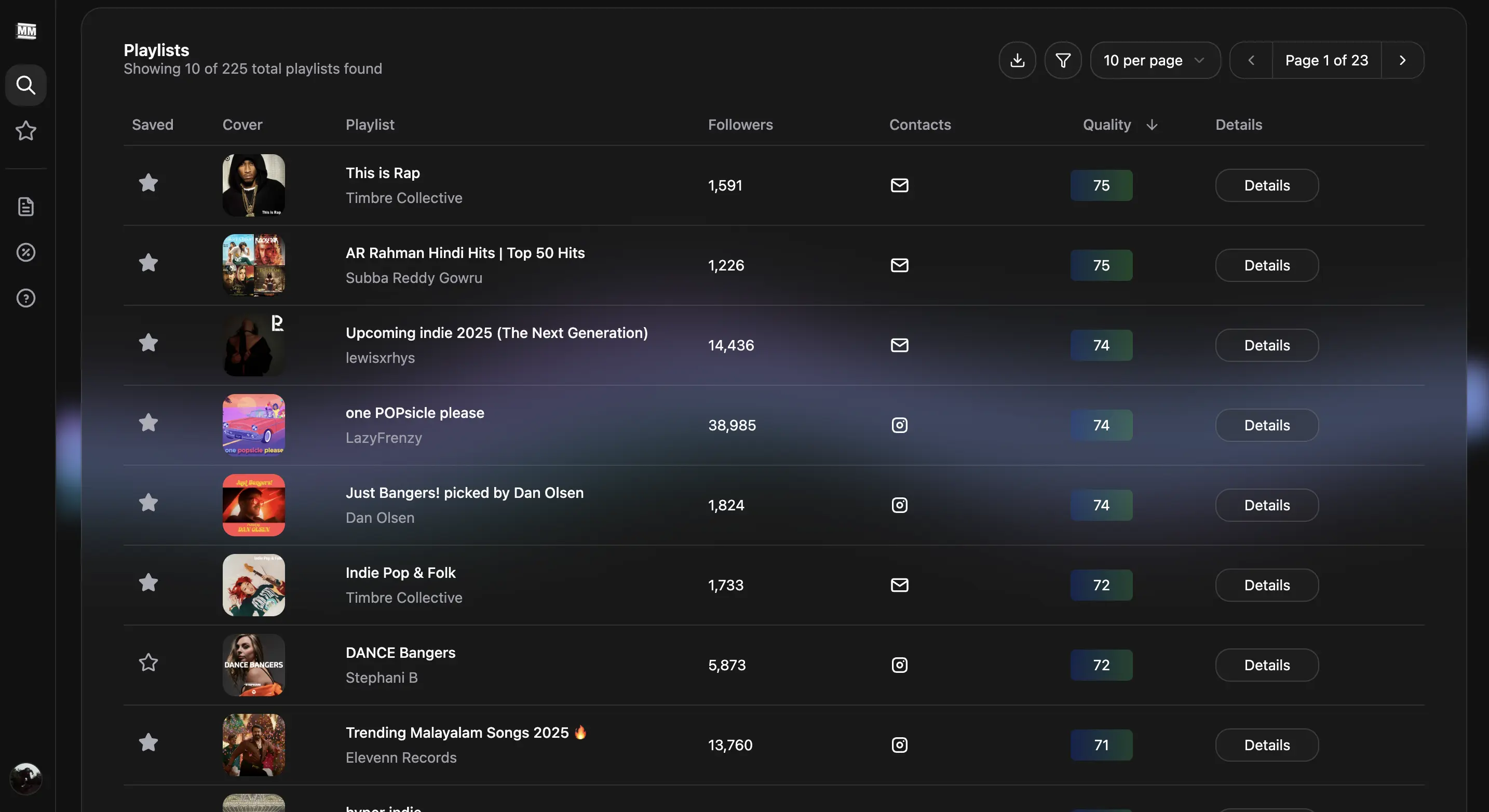
If you want to speed things up, tools like MusicMinutes can help automate parts of this. It keeps a database of thousands of playlist contacts updated automatically, so you don't have to hunt them down each time. It also assigns a quality score to each playlist based on factors like engagement levels, growth patterns, and fit for small artists, helping you prioritize the best ones. In the tool, you can search by genre or similar artists, sort results by quality ranking, and pull out the contacts you need.
From there, use your own system to contact curators, but avoid bulk emails they often land in spam and get ignored. Instead, focus on one-on-one pitches for better results.
To get started with MusicMinutes, sign up and try a search. It delivers vetted playlist data and contacts quickly, saving you time while keeping things focused on free placements. With consistent effort, whether manual or assisted, you can start seeing your music on more playlists and growing your audience.